

Mobility Aids for Getting In and Out of Bed: What Are Your Options?

Getting into bed, turning over, sitting upright and getting back onto your feet are movements most of us barely think about. When strength, balance, flexibility or mobility becomes reduced, however, these everyday movements can become some of the most difficult parts of the day.
You may be able to walk reasonably well once you are upright but still struggle to move from lying to sitting. Alternatively, lifting one leg onto the mattress might be the main problem. Some people need something sturdy to hold, while others would benefit more from changing the height or position of their bed.
There is no single mobility aid that is right for everyone.
Fortunately, there is now a wide range of bedroom aids designed to make getting into bed, getting out of bed and moving around while lying down more manageable.
The important part is identifying which part of the movement is causing difficulty before choosing the equipment.
Why Can Getting In and Out of Bed Become Difficult?
Getting out of bed is actually a sequence of different movements.
You need to reposition yourself, turn towards the edge of the mattress, move your legs, raise your upper body, sit securely on the edge of the bed and finally move from sitting to standing.
Difficulty at any one of those stages can make the whole process harder.
Common problems include:
- Reduced upper-body strength
- Weakness in one or both legs
- Difficulty lifting the legs
- Reduced balance when sitting or standing
- Limited flexibility
- Difficulty gripping
- Pain or stiffness
- Reduced stamina
- Difficulty turning or repositioning in bed
- A bed that is too high or too low
This is why simply buying a grab rail may not necessarily solve the problem.
The NHS lists equipment such as bed grab rails, leg lifters and equipment to alter bed height among the aids that may help people who struggle to get out of bed.
The first question should therefore be: what part of getting into or out of bed are you finding difficult?
Bed Levers and Bed Grab Handles
For many people, the difficulty comes when trying to raise their upper body from the mattress or when moving between sitting and standing.
A bed lever, sometimes called a bed grab handle or bed stick, provides a solid handhold beside the bed.
Rather than trying to push against a soft mattress or pull on furniture, the user has a dedicated handle that can help them reposition themselves.
NHS guidance describes bed levers as equipment designed to assist with getting into and out of bed and moving between lying and sitting positions.
Affordable Mobility’s Bed Lever Divan is one example. It features a height-adjustable grip with five adjustment settings, a tubular steel frame and a large base for stability. A strap is also supplied for use with suitable slatted bed types.
A bed lever can be particularly useful if you can:
- Move your legs independently but struggle to sit upright
- Sit on the edge of the bed but need something to hold
- Push yourself upwards but want a more secure hand position
- Reposition yourself using your arms
- Stand once upright but need assistance during the first part of the transfer
It is worth remembering that a bed lever is primarily a transfer and positioning aid. It is not automatically the same thing as a full-length bed safety rail.
Bed Rails Can Provide More Support – But They Need Careful Selection
Bed rails are another option, but it is important to understand that different products perform different jobs.
Some are designed primarily to provide a handhold for transferring. Others extend further along the mattress and may also provide a barrier at the side of the bed.
Affordable Mobility stocks the Stander 30″ Safety Bed Rail, which can function as both a support bar when getting into and out of bed and a side rail. It folds down when it is not required and attaches using a dual safety strap. The product is not suitable for UK profiling beds.
Another option is the Parnell Bed Rail, which braces from the bedroom floor rather than relying on straps or ties. It is designed for conventional domestic beds as well as compatible adjustable domestic beds and offers several hand positions.
Bed rails should never be chosen solely on the basis that a larger rail must be safer.
The Medicines and Healthcare products Regulatory Agency warns that inappropriate bed rail arrangements can create entrapment and entanglement hazards in gaps between the rail, mattress and bed frame. Suitable selection, installation and assessment are therefore important.
This becomes especially important where someone has significant mobility problems, confusion, unusual sleeping movements or uses a specialist mattress.
If there is any uncertainty, it is sensible to seek advice from an occupational therapist or another suitably qualified professional before fitting a bed rail.
Leg Lifters Can Help When the Upper Body Is Not the Problem
Sometimes getting into bed is relatively easy until it comes to lifting the legs onto the mattress.
This can occur when one leg is weak or difficult to move independently.
A leg lifter provides a simple solution.
The Affordable Mobility Leg Lifter allows the user to place a loop around the foot and use their arms to guide the leg upwards or downwards.
It can be used when moving a leg:
- Onto or off a bed
- Onto a footrest
- Into a wheelchair
- During certain transfers
- Into or out of a vehicle
Affordable Mobility also stocks another Leg Lifter designed specifically to help users independently guide an immobile or weaker leg.
The beauty of this type of mobility aid is its simplicity.
It is lightweight, does not permanently alter the bed and can be kept beside the user ready for when it is needed.
For somebody who can otherwise transfer independently but cannot comfortably lift one leg, it may be far more appropriate than installing substantial bedroom equipment.
Adjustable Backrests Can Help You Move From Lying to Sitting
Another common difficulty is raising the upper body.
Some people can stand once they are sitting on the edge of the bed but struggle to get from a flat lying position into an upright one.
An Adjustable Back Rest can provide additional upper-body support while sitting in bed.
The model currently stocked by Affordable Mobility can be adjusted through six positions and incorporates a removable padded headrest.
An adjustable backrest can also make everyday activities in bed more comfortable, including:
- Reading
- Watching television
- Having a drink
- Eating
- Speaking to visitors
- Using a tablet or mobile device
- Resting in a more upright position
It does not perform exactly the same job as an electrically adjustable bed, but it can provide a relatively straightforward way of changing the user’s resting position.
An Adjustable Bed May Be the Better Long-Term Solution
For somebody with more significant or ongoing mobility difficulties, changing the bed itself may be worth considering.
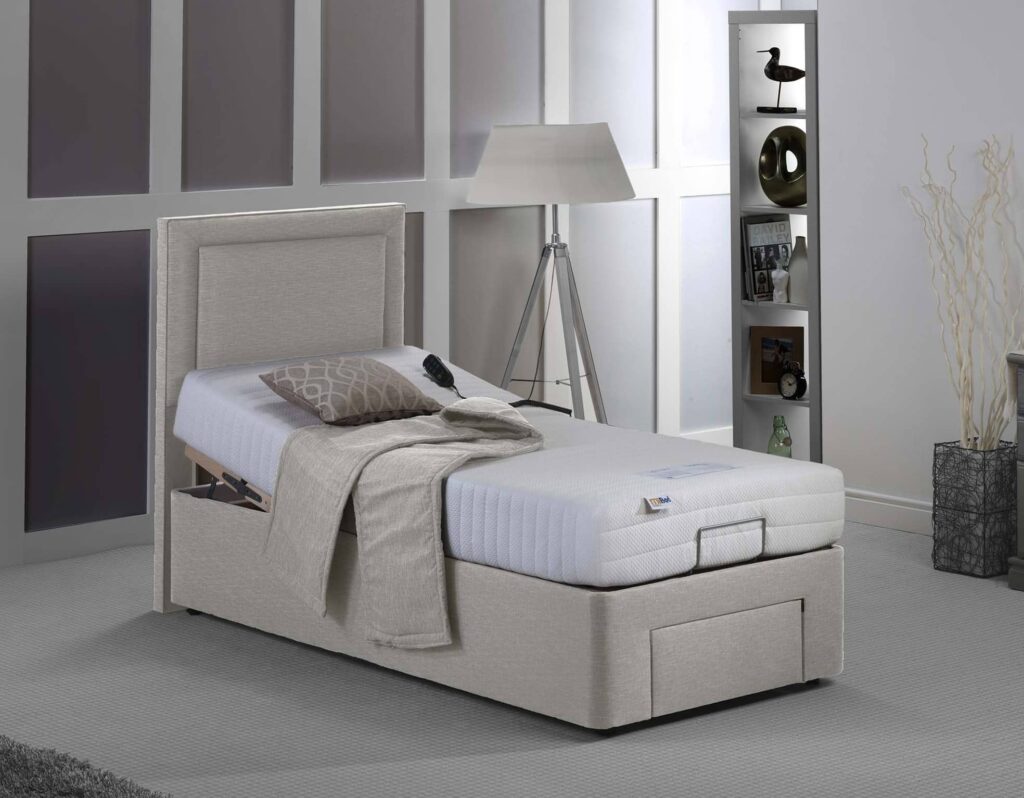
An adjustable bed allows sections of the sleeping platform to be raised or lowered electrically.
Raising the upper section can help bring the user towards a more upright position before they attempt to leave the bed.
Depending on the model, adjustment of the leg section can also help the user find a more comfortable resting position.
Affordable Mobility stocks a range of adjustable beds and compatible mattresses, including pocket sprung and memory foam options.
An adjustable bed is a much larger investment than a bed lever or leg lifter, but it may be more appropriate where difficulty moving in bed is substantial or several different aspects of positioning need to be addressed.
It is also worth considering the height of the bed.
If your feet cannot rest securely on the floor when sitting on the mattress edge, the bed may be too high. If your knees are considerably higher than your hips and standing requires a very deep movement, it may be too low.
The Royal College of Occupational Therapists notes that environmental changes such as altering the height of a chair or bed can help reduce effort and risk around the home.
Positioning Aids Can Make Moving and Resting More Comfortable
Not every bedroom mobility problem occurs during the actual transfer.
Sometimes discomfort while lying down makes it harder to reposition yourself before you even attempt to get up.
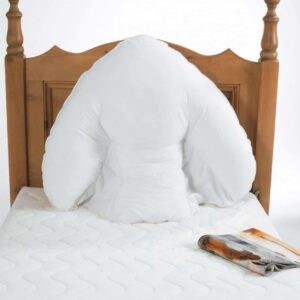
Supportive pillows and positioning aids can help create a more comfortable resting position.
Affordable Mobility’s bedroom pillow range includes a variety of supports for the head, neck, back and legs.
For example, the Harley Leg Raiser is shaped to support the backs of the knees and heels while allowing the calves to rest in a raised position.
There are also orthopaedic pillows such as the Harley Original Plus Pillow, designed to support the neck and shoulders while sleeping.
Positioning products should be chosen around the individual’s needs rather than simply adding more cushions.
Too many ordinary pillows can sometimes make movement more awkward because they shift, compress or leave the user sitting in an uncomfortable position.
A Bed Cradle Can Help When Bedding Causes Discomfort
A slightly different bedroom aid is the Bed Cradle.
Rather than helping the person physically lift themselves, a bed cradle supports blankets and sheets above part of the body.
Affordable Mobility’s model can be positioned at the side or end of the bed and is height adjustable. It is intended to keep bedding away from sensitive areas such as painful legs or feet.
That may seem unrelated to mobility at first, but comfortable positioning can have an important role.
If pressure from bedding makes moving painful or uncomfortable, removing that pressure may make turning, repositioning and preparing to leave the bed easier.
Transfer and Turning Aids Can Reduce Twisting
Some people can sit upright but find the next movement difficult: turning their body so that their legs move towards or away from the edge of the bed.
A transfer or turning aid may help in appropriate circumstances.
The Soft Transfer Seat available from Affordable Mobility is a padded flexible turning disc designed for use on beds, chairs and car seats. It allows the seated user to swivel rather than making the same twisting movement through the body.
Transfer equipment needs to suit the user’s actual abilities.
If someone cannot maintain a safe sitting position, cannot transfer their weight reliably or requires physical assistance from another person, professional assessment may be advisable rather than attempting to solve the problem with a transfer aid alone.
Over-Bed Tables Can Make Everyday Life Easier
An over-bed table does not directly lift you out of bed, but it can make a significant difference when mobility is restricted.
Keeping essentials close at hand reduces the number of times somebody needs to get up unnecessarily.
The Over Bed/Chair Table available from Affordable Mobility is height adjustable and can be used over a suitable divan bed or armchair. The tabletop can also be angled by up to 45 degrees.
It can provide a convenient surface for:
- Meals and drinks
- Books
- Medication
- Glasses
- Phones and tablets
- Remote controls
- Writing
- Hobbies
For users requiring greater adjustability, the Daleside Adjustable Overbed Table adjusts in height, width and angle and includes a reversible side table suitable for either right- or left-handed use. It also has four locking castors.
These products are particularly useful for someone spending longer periods in bed during recovery or because of restricted mobility.
Think About What Happens After You Stand Up
Getting out of bed successfully is only useful if you can then move safely away from it.
Look at the whole bedroom rather than concentrating exclusively on the mattress.
Consider whether there is:
- Enough clear space beside the bed
- Suitable lighting for getting up during the night
- A clear route to the door or bathroom
- Loose rugs or clutter in the transfer area
- Somewhere secure to place glasses or walking aids
- Easy access to a light switch
- Appropriate footwear close by
If you normally use a walking stick, frame or rollator, it should be positioned where it can be reached safely without stretching or leaning dangerously.
The aim should be to create one smooth sequence: lying to sitting, sitting to standing and standing to walking.
Which Bed Mobility Aid Is Right for You?
Start by identifying the movement you cannot comfortably perform.
If you struggle to pull yourself upright, a bed lever or grab handle might help.
If lifting your leg is the problem, consider a leg lifter.
If remaining comfortable and upright in bed is difficult, an adjustable backrest or adjustable bed may be more useful.
If you need something beside you for meals, medication and personal belongings, an over-bed table can reduce unnecessary reaching and movement.
If turning is difficult, a suitable transfer or positioning aid may help.
And if you require a substantial side rail, make sure the equipment is compatible with your bed and mattress and suitable for your individual circumstances.
The smallest solution that addresses the actual problem is often better than simply buying the largest piece of equipment available.
When Should You Ask for Professional Advice?
Minor difficulties can often be solved with straightforward daily living aids, but there are situations where professional assessment is particularly useful.
Consider seeking advice if:
- You have started falling while getting into or out of bed
- Your mobility has changed significantly
- You require another person to physically lift you
- You regularly slide or fall from the bed
- You are considering substantial bed rails or transfer equipment
- You are unsure whether an aid is compatible with your mattress or bed
- You have difficulty maintaining a seated position
- More than one part of the transfer is becoming difficult
An occupational therapist can assess how you move around your home and identify equipment or adaptations that may make everyday activities easier. The NHS explains that a home assessment can look specifically at the activities an individual struggles with and help determine what equipment or adaptations may be appropriate.
Small Bedroom Aids Can Make a Big Difference
Difficulty getting in and out of bed does not automatically mean you need to completely replace your bedroom furniture.
Sometimes a simple leg lifter or bed grab handle is enough to restore confidence and make the movement easier.
For other users, a combination of equipment may work better: perhaps a bed lever to sit upright, a leg lifter to move the legs, and an over-bed table to keep essentials within reach.
More substantial mobility problems may justify looking at adjustable beds, specialised transfer equipment or professionally assessed bedroom adaptations.
At Affordable Mobility, we stock a wide selection of bedroom aids, daily living aids, over-bed tables, supportive pillows and adjustable beds and mattresses designed to make everyday life around the home more manageable.
The right equipment should support the way you move, rather than forcing you to adapt to the equipment. If you are unsure what would work best, speak to our team about the part of getting into or out of bed that you are finding difficult and we can help you explore the available options.