

Walking Aids Explained: Everything You Need to Know
Walking is something most of us give very little thought to until it becomes more difficult. Changes in balance, strength, mobility or confidence can turn a short journey around the house or a trip to the shops into something that requires much more concentration and effort. The right walking aid can provide additional support without taking away your independence. In many cases, it can do exactly the opposite: give you the confidence and stability to keep moving and continue doing more for yourself.
At Affordable Mobility, we have been helping people find suitable mobility equipment since 1996. One thing we have learned during that time is that there is no single walking aid that suits everybody. Some people only need the light support of a walking stick. Others require crutches to take pressure away from one or both legs. A walking frame can provide considerably more stability, while a wheeled rollator may be more appropriate for somebody who wants support during longer walks without continually lifting a frame.
What Is a Walking Aid?
A walking aid is any piece of mobility equipment designed to provide additional support while standing or walking. The term covers a broad range of products, including walking sticks, multi-legged walking sticks, crutches, walking frames, wheeled walking frames, tri-walkers, four-wheel rollators and specialist gutter frames.
They do not all provide the same amount or type of support. A walking stick may simply provide an additional point of contact with the ground. A walking frame surrounds the user with a much wider support base, while a rollator adds wheels and brakes so that the walking aid can move continuously with the user.
Choosing correctly therefore means looking beyond the general term “walking aid” and thinking about exactly what support you need.
Why Might You Need a Walking Aid?
There are many reasons why somebody might start using a walking aid. For some people, it follows an injury, operation or period of rehabilitation. For others, mobility changes gradually and additional support simply makes everyday walking more manageable.
A walking aid may be worth considering if you regularly reach for furniture or walls while walking, feel less steady when standing or changing direction, become tired quickly, need support on one side or feel more confident when somebody is walking beside you. It can also help when you need to take some weight away from a leg or find uneven ground increasingly difficult.
The important question is not whether you are “bad enough” to need a walking aid. We prefer to think about what would make everyday mobility easier and more comfortable.
Walking Sticks – Lightweight Support for Everyday Mobility
A walking stick is usually the simplest form of walking aid. It provides an additional point of contact with the ground and can be useful for somebody who remains independently mobile but would benefit from some extra stability or support.
Our Combi Walking Stick, for example, is manufactured from anodised aluminium and can be adjusted between approximately 711mm and 1092mm. It also features an ergonomic handle and anti-slip rubber ferrule.
The height adjustment is important because a walking stick that is too high or too low can be awkward to use and may encourage an uncomfortable walking posture. A conventional stick may suit somebody who needs relatively light support, remains independently mobile and wants something lightweight and portable.
Multi-Legged Walking Sticks – More Stability Than a Standard Stick

Sometimes a single-point walking stick does not provide quite enough stability. A tripod or tetrapod stick uses several feet at the base rather than one.
The Small Base Tetrapod has four feet arranged to provide a broader and more stable base. It is height adjustable and uses anti-slip ferrules at each contact point.
This type of walking aid can be useful for somebody who likes the compact nature of a walking stick but requires greater stability when putting weight through it. A wider base generally creates a larger support area, although it also takes up more floor space.
Crutches – When More Weight Needs to Be Supported

Crutches provide a different kind of assistance. Rather than simply giving an extra balance point, they allow more body weight to be transferred through the arms and walking aid.
The Combi Double Adjustable Elbow Crutches available from Affordable Mobility are made from anodised aluminium and can be adjusted to suit the user. They have anti-slip rubber ferrules and a maximum user weight of 190kg, or approximately 30 stone.
Double adjustment allows the relationship between the cuff, handgrip and overall height to be set more appropriately for the individual. This matters because crutches should work with your body rather than forcing your body to adapt to them.
What Are Gutter Crutches?

The Gutter Crutch uses a padded forearm trough that allows weight to be distributed across a larger area of the forearm instead of concentrating it primarily through the hand. Its telescopic handles can also be rotated and adjusted according to forearm length.
We would generally consider this a more specialist walking aid. If somebody has complex mobility or upper-limb requirements, getting appropriate advice on setup and suitability becomes particularly important.
Walking Frames – Greater Stability Around the Home

When more substantial support is required, a walking frame provides a much larger base than a stick or pair of crutches. Traditional walking frames have four legs and surround the user on three sides.
The Unwheeled Walking Frame available from Affordable Mobility is manufactured from lightweight aluminium and comes in small, medium and large sizes. It has a maximum user weight of 159kg, or approximately 25 stone.
An unwheeled frame needs to be lifted slightly and repositioned before the user steps forwards. That slower, more controlled movement can feel reassuring for somebody who wants the frame to remain fixed until they deliberately move it.
Wheeled Walking Frames – Easier Forward Movement

A Wheeled Walking Frame looks similar to a traditional walking frame but has wheels on the front legs. Instead of lifting the entire frame with every step, the rear legs can be lifted slightly while the front wheels allow the frame to move forwards.
For some users, this can make walking feel smoother and reduce the effort required compared with repeatedly lifting a fully unwheeled frame. The Affordable Mobility wheeled model is constructed from aluminium, comes in small, medium and large sizes and supports users up to 159kg, or around 25 stone.
The choice between wheeled and unwheeled frames is not simply a case of one being better. It depends on how much stability you require, your ability to control the frame and the environment in which it will be used.
Gutter Frames – Forearm Support Rather Than Hand Support

Just as gutter crutches can help people who struggle to bear weight through their hands, gutter walking frames provide a broader area for supporting the forearms.
The Gutter Frame available from Affordable Mobility uses supportive troughs with adjustable handles. This type of frame can be useful when a conventional handgrip is unsuitable or when a more upright supported position is required.
Because gutter frames are more specialised than ordinary walking frames, correct adjustment is especially important.
What Is a Rollator?
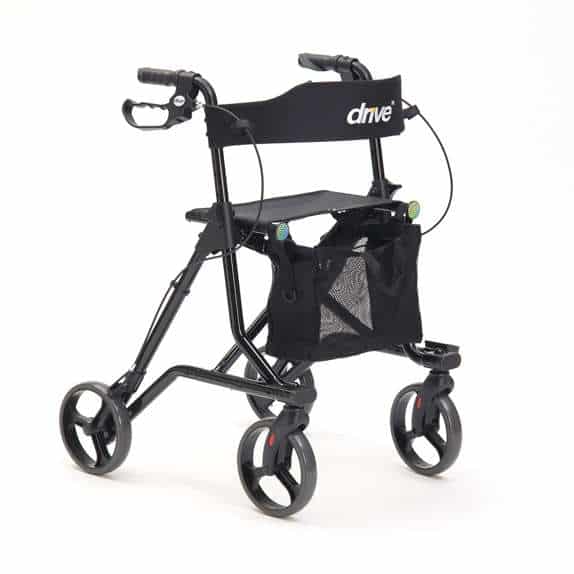
A rollator is a wheeled walking aid designed to move continuously as you walk. Unlike a basic wheeled walking frame, most modern rollators have either three or four wheels, handle-operated brakes and a folding frame.
Many four-wheel models also include a built-in seat, storage bag or basket, backrest, walking-stick holder and larger outdoor wheels. For someone who can walk independently but wants continuous support, particularly over longer distances, a rollator can provide much more freedom than a traditional frame.
Affordable Mobility stocks a wide selection of rollators ranging from lightweight everyday models to advanced premium designs.
Three-Wheel Rollators and Tri-Walkers
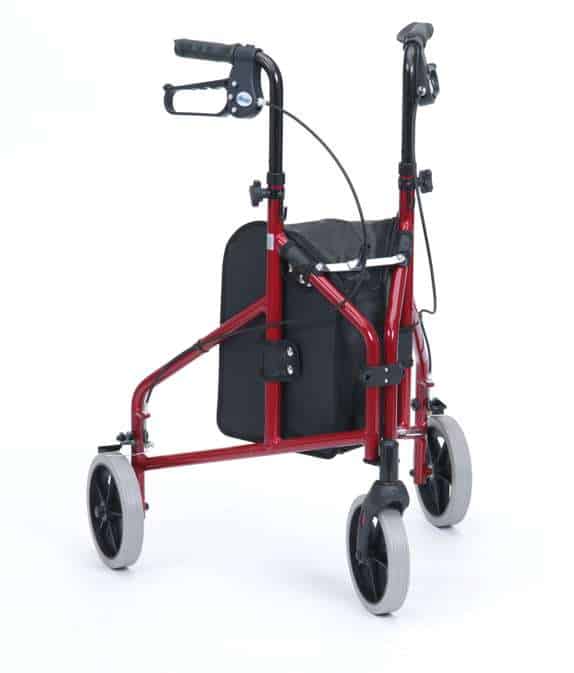
A three-wheel rollator, often called a tri-walker, has one wheel at the front and two at the rear. Its main advantage is manoeuvrability.
The Ultra-Lightweight Tri-Walker features an aluminium frame, adjustable handles, a swivelling front wheel and looped cable brakes that can be locked when required. It also folds for transport and storage.
The compact design makes a tri-walker attractive to people who value portability and agility. However, a three-wheel design generally does not offer the same broad footprint or seated rest facility found on many four-wheel rollators.
Four-Wheel Rollators – Support, Storage and Somewhere to Rest
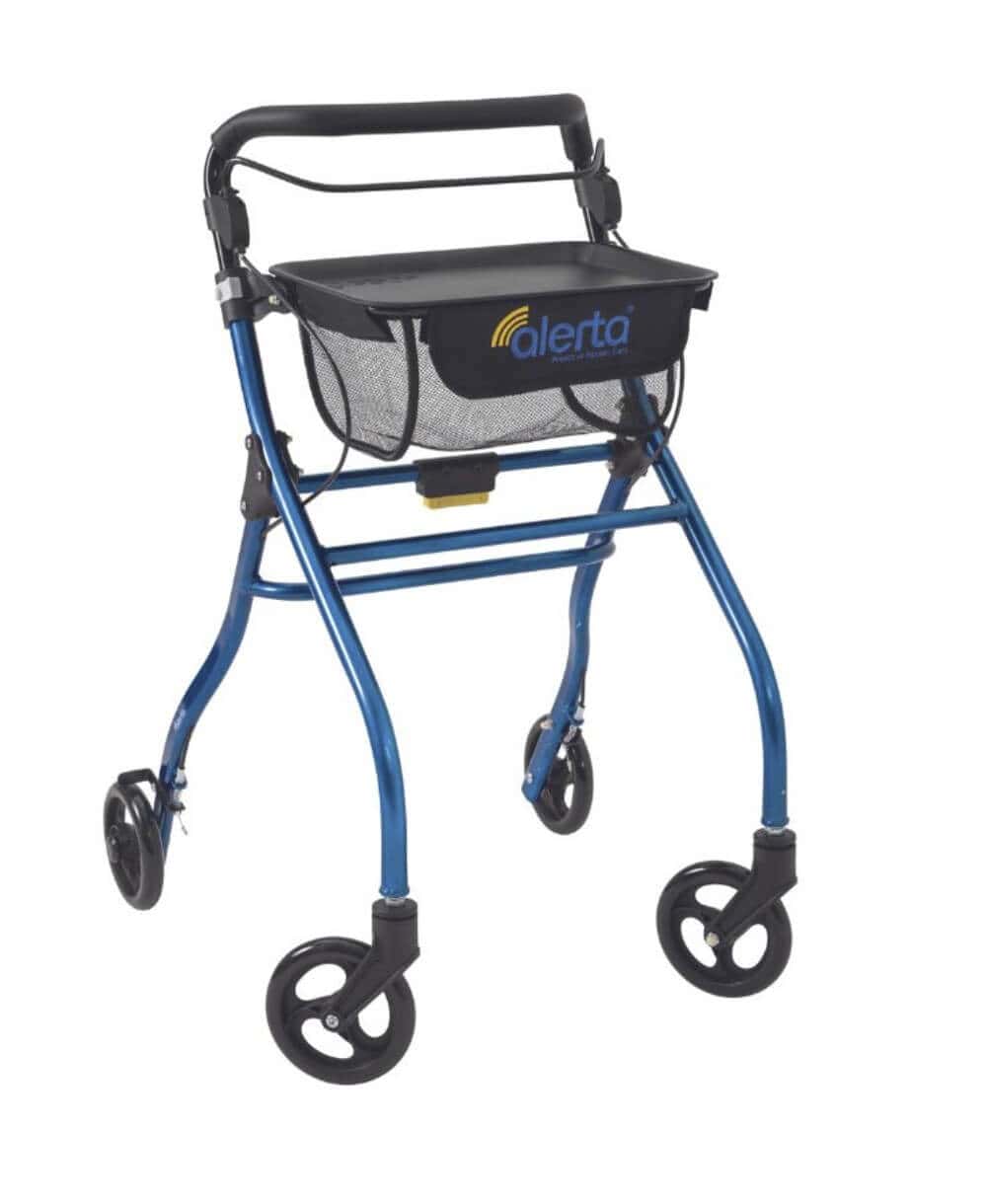
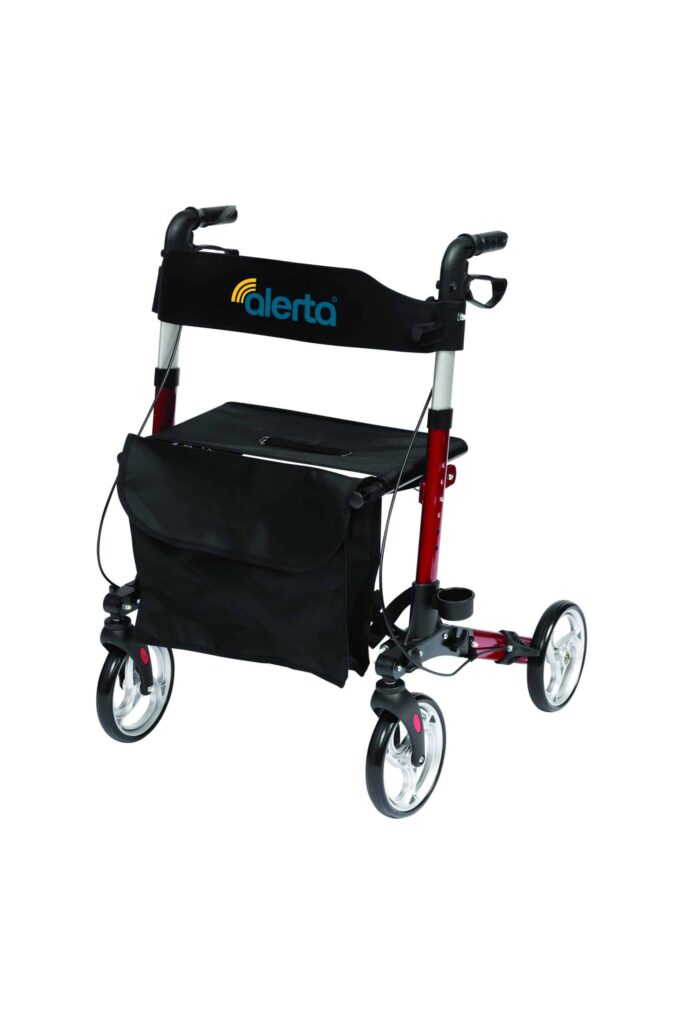
Four-wheel rollators are among the most versatile walking aids available. They provide continuous support while walking, brakes for controlling movement and, depending on the model, somewhere to sit when a rest is required.
Our Aluminium Lightweight Rollator combines a folding aluminium frame with height-adjustable handles, anatomical grips and lockable loop brakes. It is designed for both indoor and outdoor use.
For somebody who regularly walks around shops, local streets or larger indoor environments, the ability to keep the walking aid rolling rather than repeatedly lifting it can make longer journeys much more practical.
Premium Rollators for Frequent Use
If a walking aid will be used every day, features such as weight, folding method, wheel quality, seating comfort and storage can become much more important.
The TOPRO Troja Original weighs approximately 6.8kg yet has a user weight capacity of up to 165kg. It includes a mesh seat, accessible storage basket, height-adjustable handles and a lateral folding system that can be operated with one hand.
Those details may seem secondary when first comparing walking aids, but they become important when you are repeatedly folding the rollator into a car, storing it at home or using it throughout the day.
Walking Frame or Rollator: What Is the Difference?
These two products are often confused. The simplest distinction is how they move.
A traditional walking frame is positioned, followed by the user. A rollator moves with the user.
A walking frame normally provides a slower and more deliberate form of support, while a rollator is intended to provide support while maintaining a more continuous walking rhythm.
A rollator may therefore suit somebody who remains relatively mobile but wants additional stability over longer distances. A walking frame may be more appropriate where a greater feeling of fixed support is required.
Neither is automatically safer or better. The right choice depends on the individual.
What Should You Look for When Choosing a Walking Aid?
Once you have narrowed down the type of walking aid, there are several practical details worth comparing.
Height
Correct height affects how naturally you can stand and walk with the aid. Many Affordable Mobility walking sticks, crutches, frames and rollators are height adjustable for this reason.
Maximum user weight
Every mobility product has a specified maximum user weight. Do not assume that two products that look similar have the same capacity.
Handle design
Your hands are one of the main contact points with the walking aid. Think about the size, shape and material of the grip, particularly if you experience reduced grip strength or hand discomfort.
Ferrules
The rubber foot found on a walking stick, crutch or walking frame is known as a ferrule. It is a small component with an important job: maintaining secure contact with the floor. Ferrules wear with use and should be inspected regularly.
Wheels
With rollators and wheeled walking frames, wheel size and construction can influence how the aid feels. Larger wheels may be helpful on outdoor surfaces, while compact designs can be easier to manoeuvre indoors.
Brakes
Rollator brakes should be easy for you to operate comfortably. Many use loop-style controls that work as both normal brakes and parking brakes.
Folding
If the walking aid needs to go into a car, cupboard or narrow storage space, folding design matters. Check not only whether it folds but how easily it folds and what size it becomes afterwards.
Seat
A built-in seat is one of the biggest reasons some people choose a four-wheel rollator. If you become tired during longer journeys, having somewhere to stop and rest can extend how far you are comfortable travelling.
Storage
Bags and baskets can be surprisingly useful. Integrated storage allows personal belongings to remain with the walking aid while keeping your hands available for the handles.
Indoor and Outdoor Walking Aids Are Not Always the Same
Think about your environment before buying. A product that is excellent on a wide outdoor pavement may feel cumbersome in a small flat, while a very compact indoor walking aid may not provide the ride or wheel size you want for regular outdoor journeys.
Around the home, consider doorway widths, furniture placement, flooring, turning space, thresholds and storage. For outdoor use, think about pavement quality, kerbs, gradients, distance, whether you need a seat, whether you carry shopping and how the aid will be transported.
If you need one walking aid for both environments, a lightweight folding rollator can provide a useful compromise, but individual requirements still matter.
How High Should a Walking Aid Be?
Correct adjustment is one of the most important parts of using a walking aid comfortably.
An aid that is set too low may encourage you to bend forwards, while one that is too high can push the shoulders upwards and make it difficult to use the arms naturally.
Walking sticks, crutches and frames all have slightly different fitting requirements, so we would not recommend applying one universal measurement to every product. When buying independently, our Affordable Mobility team can help explain the adjustment options available on the products we stock.
Do Walking Aids Need Maintenance?
Yes, although the amount required is usually modest. Walking aids are mechanical products that are repeatedly loaded and moved, so they should be checked periodically.
Pay particular attention to worn ferrules, loose adjustment mechanisms, damaged grips, brake operation, brake cables, wheel condition, folding locks, loose fixings and the condition of any seat or backrest.
Do not wait for a heavily worn ferrule or poorly functioning brake to become completely unusable. Regular visual checks can identify many simple problems early.
Common Mistakes When Choosing a Walking Aid
One of the biggest mistakes is choosing purely on appearance. A lightweight rollator may look attractive online, but if you need substantial fixed support it may not be the appropriate style of product.
Similarly, buying the largest and most supportive frame available does not necessarily make sense if you only need occasional assistance and have to transport the product regularly.
Other common mistakes include buying without checking the height range, ignoring the maximum user weight, choosing wheels that do not suit the intended environment, selecting a rollator without considering brake operation and forgetting to measure storage or car boot space.
The best walking aid is not necessarily the product with the longest feature list. It is the product whose features match the way you actually move through everyday life.
Which Walking Aid Is Right for You?
A useful way to narrow down the choice is to think in terms of the level and type of support required.
If you remain mobile and only want light assistance, start by looking at walking sticks.
If weight needs to be transferred away from a leg or more controlled support is required, crutches may be more appropriate.
If you need a wide and stable support area, look at walking frames.
If you remain reasonably active and want continuous wheeled support, particularly over longer distances, a rollator may provide more flexibility.
Finding the Right Walking Aid with Affordable Mobility
Walking aids are relatively simple products compared with powered wheelchairs and mobility scooters, but choosing correctly still matters.
At Affordable Mobility, we have been working with mobility and disability equipment since 1996. Our experience means we understand that a product specification only tells part of the story.
The real questions are practical. Where will you use it? How much support do you need? Can you grip the handles comfortably? Will you need to put it in a car? Do you need somewhere to sit? Are you mainly walking around the house, or do you want to get back to longer outdoor journeys?
Our walking aids range includes everything from straightforward aluminium walking sticks and crutches through to walking frames, tri-walkers and premium four-wheel rollators.
The aim is not to move somebody onto the biggest walking aid available. It is to find the right level of support while preserving as much comfortable, practical independence as possible.
A walking aid should help you get where you want to go. It should not become another obstacle you have to work around.