
Living Aids That Make Everyday Life Easier

The best living aids are often not complicated pieces of equipment. Sometimes, all it takes is a better handle on an everyday object, a little extra reach, somewhere supportive to sit or a simple way to complete a task without having to ask somebody else for help.
Those small changes can make a surprisingly big difference.
At Affordable Mobility, we have been helping people find practical mobility and independent living solutions since 1996. Over the years, we have seen how the right daily living aid can remove frustration from an activity that most people barely think about.
Turning a key. Picking something up from the floor. Eating with one hand. Checking the time during the night. Getting out of a car. Carrying a meal from one room to another.
When strength, mobility, balance, eyesight or dexterity changes, everyday objects do not always work as well as they once did. That is where well-designed living aids can help.
Rather than filling this list with several versions of essentially the same product, we have selected a range of very different products from Affordable Mobility. Each one addresses a particular everyday problem and demonstrates how relatively simple equipment can support greater comfort and independence.
Handy Reacher – Pick Things Up Without Bending or Stretching

Dropping the television remote onto the floor is a minor inconvenience until bending down to retrieve it becomes difficult.
The Handy Reacher is one of those straightforward living aids that can quickly become useful throughout the home. It helps users retrieve small items without repeatedly bending down or overreaching.
We can see a reaching aid being useful in almost every room. You might use it to pick up clothing from the bedroom floor, retrieve post near the front door, reach something behind a chair or access a lightweight item that is just beyond comfortable reach.
Its lightweight construction also makes it easier to manoeuvre without creating another heavy or awkward piece of equipment to manage.
For somebody who experiences restricted movement or difficulty bending, a reacher can help turn dozens of small daily tasks into something much more manageable.
Key Turner III – Make Everyday Keys Easier to Hold and Turn

We use keys so routinely that it is easy to underestimate the amount of finger strength and fine control involved in turning one.
A standard key gives you very little surface area to grip. If your hands are stiff or your grip has weakened, even unlocking your own front door can become unnecessarily awkward.
The Key Turner III places the key inside a much larger curved handle. The heavy-duty plastic handle provides additional leverage, reducing the amount of force that needs to come directly from the fingers.
It can hold up to three keys, and the keys fold back into the handle when they are not being used.
For us, the clever part is not simply that the product makes the key larger. It changes how you can apply force to it. Instead of pinching a narrow piece of metal between your fingertips, you have a broader handle that can be held more comfortably in the hand.
It is a very small adaptation, but when you use your keys several times every day, small improvements can soon add up.
Novo Cup – Make Independent Drinking More Manageable
Drinking from an ordinary cup assumes that you can sit upright, lift the cup towards your mouth and control its angle comfortably.
If movement around the head, neck or upper body is restricted, that can become much more difficult.
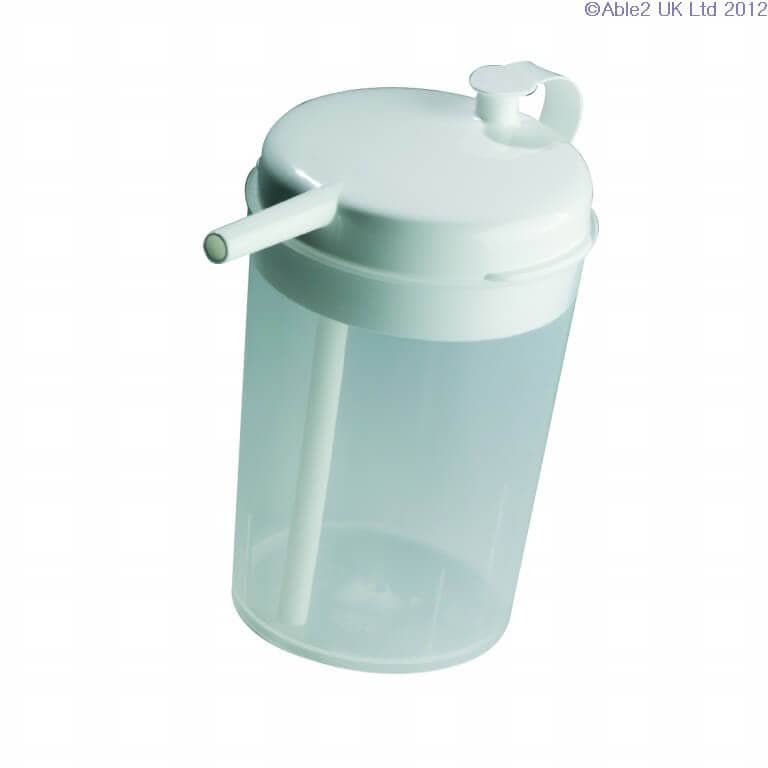
The Novo Cup has been designed so that a person can drink while lying down without needing to be continually propped upright.
The user remains in control of the flow, while the design is intended to resist spilling if the cup is tipped over. It holds 250ml and can accommodate both hot and cold drinks.
It is also transparent, allowing the contents to be seen easily, with measurement markings incorporated into the cup.
We think this is a particularly good example of thoughtful assistive design. Instead of expecting the person to adapt their body to a conventional cup, the design of the cup has been changed to better suit the person using it.
Food Guard – Make One-Handed Eating Easier
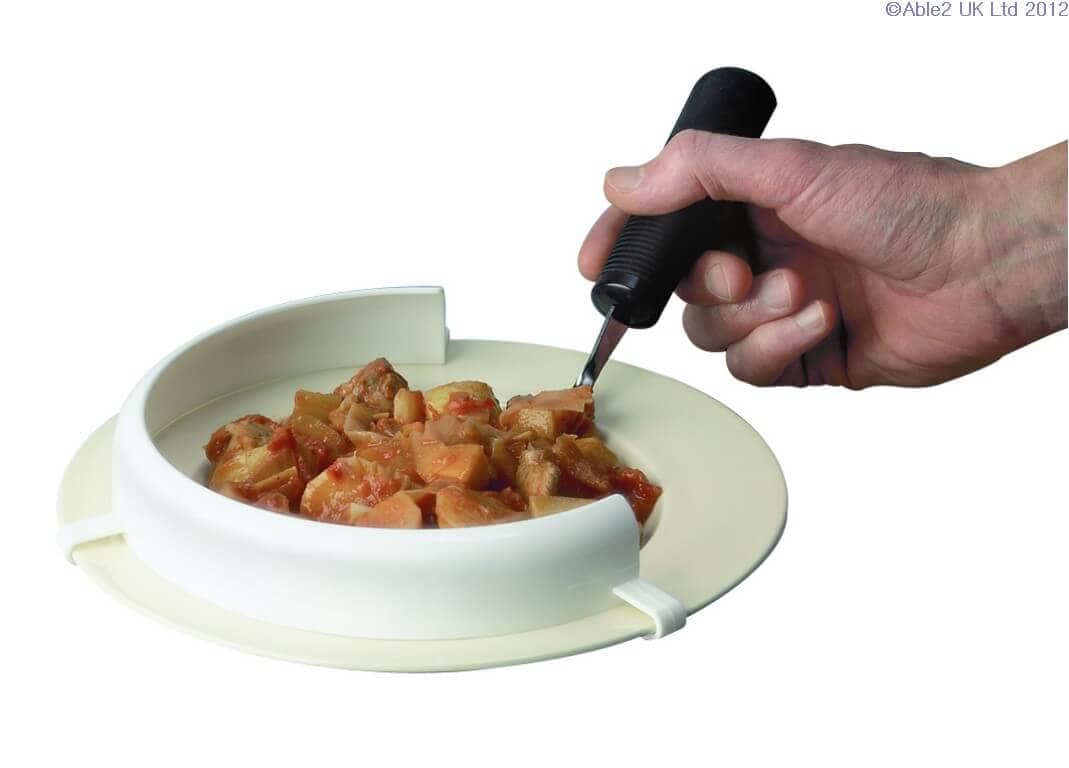
Eating with one hand can turn something as ordinary as getting food onto a fork into a frustrating task.
Most of us naturally use a knife and fork together. One utensil holds or pushes the food while the other collects it. If only one hand is available, food can simply move across the plate instead.
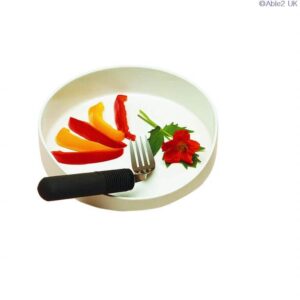
The Food Guard provides a simple solution by attaching to the rim of an ordinary plate.
Three clips hold it in position and create a high, inward-sloping edge. Food can then be pushed against the guard and onto a fork or spoon rather than being pushed over the edge of the plate.
It fits round plates with an external diameter of approximately 190mm to 254mm and is both microwave and dishwasher safe.
What we particularly like about this type of independent living aid is that it does not completely change the mealtime experience. You can continue using an ordinary plate while adding a relatively small adaptation that makes eating easier.
7-Day Extra Large Pill Box – Keep a Weekly Medication Routine Organised

When medication needs to be taken regularly, keeping everything organised can become important.
The 7-Day Extra Large Pill Box provides separate, clearly labelled compartments for each day of the week.
The compartments are larger than those on many compact pill organisers, while large lettering helps make individual days easier to identify. Each daily section also has its own flip-top lid for straightforward access.
At approximately 230mm long, 45mm wide and 27mm deep, it remains compact enough for a bedside table or other convenient location while providing plenty of room for a weekly medication routine.
The main benefit here is organisation.
Rather than checking several different packets throughout the week, medication can be arranged in advance where this is suitable for the medication being taken.
A pill organiser does not replace prescribing instructions, and medication should always be taken exactly as directed. Its purpose is simply to make an existing medication routine easier to organise.
Talking Alarm Clock – Make Checking the Time More Accessible

An alarm clock might not immediately come to mind when thinking about disability living aids, but a conventional clock relies almost entirely on sight.
The Talking Alarm Clock provides an alternative way to access the same information.
Pressing the large button on top prompts the clock to announce the current time aloud. It can also announce the temperature and offers an optional hourly time announcement.
For visual reference, it combines a traditional analogue clock face with a digital display.
This can be especially convenient during the night. Instead of switching on a bedside lamp, locating glasses or trying to read a small illuminated display, the user can simply press the large button and listen to the time.
Good accessibility often means providing information in more than one way. Combining spoken information, analogue hands and a digital display gives the user a choice according to what works best for them.
HandyBar – Extra Support Getting In and Out of a Car

Getting down into a car seat can often be easier than getting back out again.
Standing up from a low vehicle seat can require leg strength, balance and something secure to push against. Unfortunately, a car door or dashboard does not always provide a particularly useful handhold.
The HandyBar is designed to provide a firm point of support when entering or leaving a vehicle.
It slots into the U-shaped door striker found on many vehicles, creating a strong handle that the user can push against when raising or lowering themselves.
The rubberised handle provides a secure gripping surface, while the forged steel shaft has a stated support capacity of up to 25 stone. The HandyBar is suitable for many vehicles using a common U-shaped striker and can be used on either the driver or passenger side.
It also incorporates a seatbelt cutter and window breaker for emergency use.
For somebody who can travel comfortably once seated but finds the physical transfer into or out of the vehicle increasingly difficult, a simple car transfer aid can provide useful additional leverage without requiring permanent modifications to the vehicle.
We would always recommend checking compatibility with the individual vehicle before use.
Perching Stool – Take the Strain Out of Standing Tasks
Not every mobility difficulty involves walking.
Sometimes the challenge is remaining standing in one position for several minutes at a time.
Preparing food at a kitchen worktop, washing dishes, completing household tasks or carrying out a personal care routine can become tiring when prolonged standing is uncomfortable.
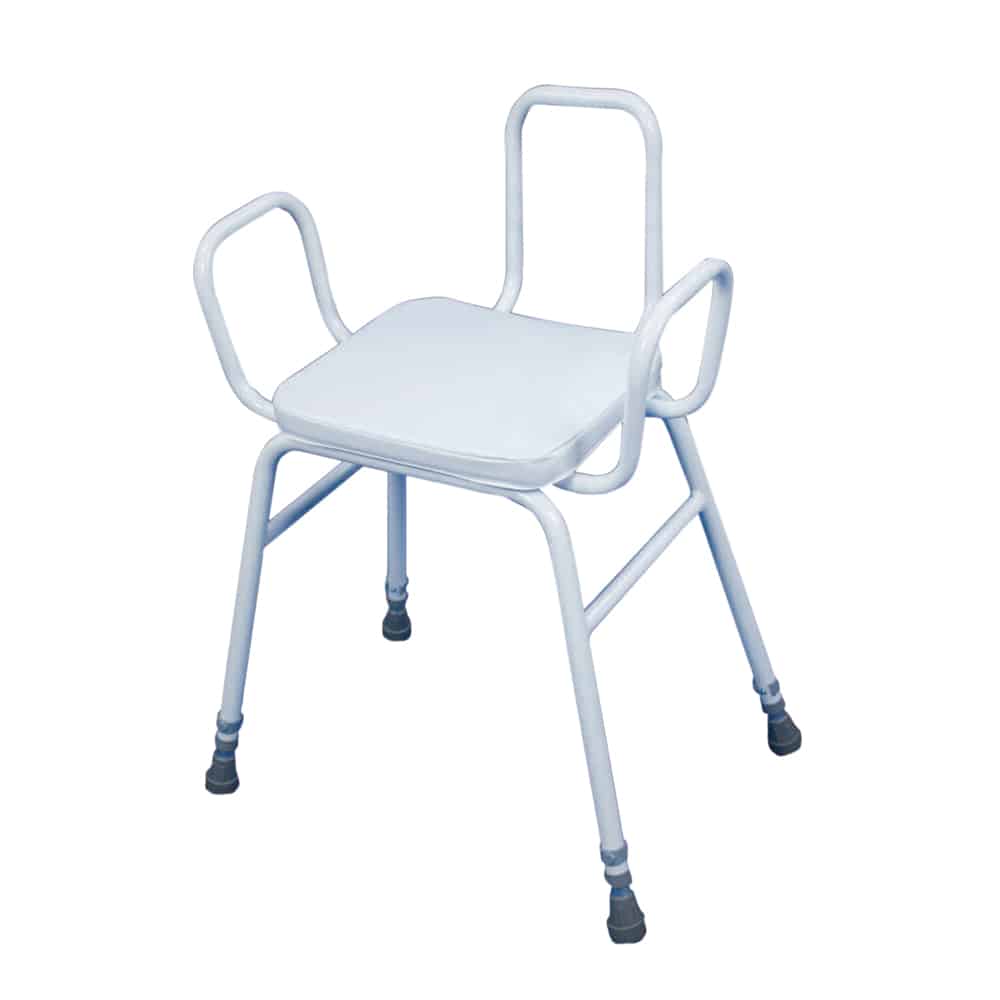
The Perching Stool allows the user to work from a supported, semi-seated position rather than either standing completely upright or sitting too low to comfortably reach the task.
This model has a padded angled seat, height-adjustable legs and side-mounted stress bars designed to provide additional stability. Its maximum user weight is 159kg, or approximately 25 stone.
The angled seating position is important because a perching stool works differently from an ordinary dining chair. It allows the user to remain at a practical working height while transferring some of their weight away from the legs.
We find perching stools particularly versatile because they can potentially help with several different activities around the home rather than solving only one specific problem.
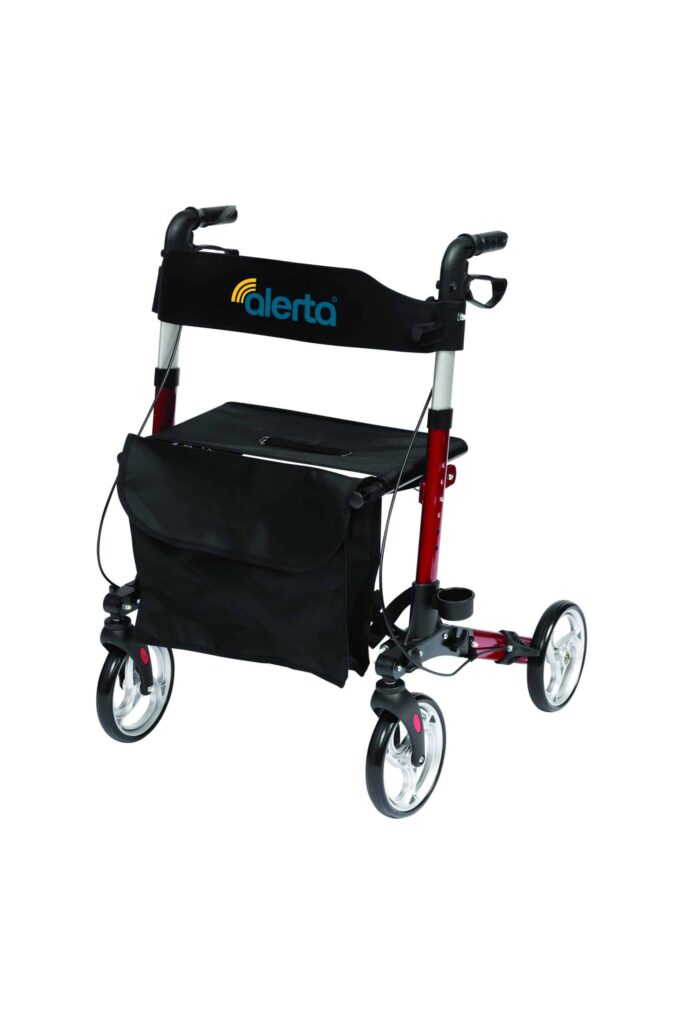
TOPRO Hestia Indoor Rollator – Support for Moving Around the Home

Outdoor rollators are familiar to many people, but mobility difficulties do not simply disappear when somebody walks through their front door.
The TOPRO Hestia Indoor Rollator has been designed specifically for moving around the home.
Its features consider the types of activities people actually carry out indoors rather than simply providing a frame to hold while walking.
The Hestia includes a height-adjustable handrail and a brake lever that can be operated with one hand. Integrated extendable rise handles provide additional support when sitting down or standing up.
A sliding tray can also be used to carry meals, drinks and other household items between rooms.
That last feature is particularly useful.
Trying to use a walking aid while simultaneously carrying a cup, plate, book or other household item is not always practical. An indoor rollator with a tray can support walking while also giving everyday objects somewhere secure to go.
When it is not required, the Hestia can be folded for storage and remains standing while folded.
This is a more substantial living aid than many of the smaller products in this article, but for somebody who requires regular support moving around their home, it can address several everyday challenges within a single piece of equipment.
How Do You Choose the Right Living Aid?
The most expensive or technically advanced product is not automatically the most useful one.
We recommend starting with the task itself.
What is actually becoming difficult?
If bending towards the floor is the problem, a reaching aid may be enough. If standing at the kitchen worktop causes fatigue, a perching stool addresses a completely different need. If the difficulty is turning a front-door key, changing the way that key is held may solve the problem more effectively than purchasing a much larger piece of mobility equipment.
It also helps to think about where the product will be used, how often it will be needed and whether the user can operate it comfortably without unnecessary effort.
For straightforward daily living aids, the problem is often very specific. Someone may know that they need help reaching, gripping, eating, drinking, carrying items or getting out of a chair or vehicle.
Where the requirement is more complicated, it is worth taking time to consider comfort, positioning, stability, available space and how the equipment will fit into the user’s existing routine.
At Affordable Mobility, we believe the best living aid is the one that solves a real everyday problem without making life more complicated in another way.
Small Living Aids Can Make a Big Difference
When people hear the term mobility equipment, they often think first about mobility scooters, wheelchairs, stairlifts and larger home adaptations.
Those products can transform somebody’s independence, but they are only one part of the picture.
Daily life consists of dozens of smaller activities: unlocking the front door, making a drink, picking something up, eating a meal, getting into the car, preparing food, checking the time and moving safely between rooms.
When one of those tasks becomes difficult, the right living aid can remove unnecessary frustration from something that happens every single day.
At Affordable Mobility, we supply a broad selection of living aids for everyday independence, including daily living products, kitchen and dining aids, health and wellbeing products, rollators, walking aids and other practical equipment.
Our aim is to help people find mobility and independent living solutions that suit the way they actually live rather than simply recommending equipment for the sake of it.
Sometimes maintaining independence requires a significant home adaptation.
Sometimes it simply means being able to turn your own front-door key, carry your own lunch or pick something up from the floor again.
Both matter.