


Class 2 vs Class 3 Mobility Scooters: What Is the Difference?
Choosing the right mobility scooter can feel a little overwhelming, especially when you start seeing terms like Class 2 mobility scooters and Class 3 mobility scooters. At first glance, they may look similar. They both help people move around more comfortably, both can support independence, and both come in a range of sizes and styles. But here’s the thing: they are not designed for the same type of use.
The main difference between Class 2 and Class 3 mobility scooters comes down to where they can be used, how fast they can travel, and what features they need to have. In simple terms, Class 2 scooters are generally made for pavement and indoor use, while Class 3 scooters are larger, faster, and suitable for road use as well as pavement use.
That said, there’s more to it than just speed. Your choice may depend on your lifestyle, where you live, how often you travel, how far you need to go, and whether you want something compact and portable or strong and road-ready.
What Are Mobility Scooter Classes?
Mobility scooter classes are used to separate scooters by their design, speed, and permitted use. In the UK, mobility scooters are generally grouped into Class 2 and Class 3 categories. These classes help users understand whether a scooter is mainly suitable for pavements or whether it can also be used on roads.
A Class 2 scooter is usually lighter, slower, and more compact. It is designed for pavements, shopping centres, parks, pedestrian areas, and some indoor spaces. A Class 3 scooter is usually larger, more powerful, and built with extra safety features for road use.
So, if you’re wondering, “Do I need a Class 2 or Class 3 mobility scooter?” the answer depends on how and where you plan to use it. A person who mainly visits local shops may not need the same type of scooter as someone who travels longer distances or needs to use roads regularly.
Class 2 Mobility Scooters Explained
What is a Class 2 mobility scooter?
A Class 2 mobility scooter is designed mainly for pavement use. These scooters typically have a maximum speed of 4 mph, which makes them suitable for areas where pedestrians are walking. They are commonly used for short trips, shopping, visiting friends, getting around town centres, and moving through pedestrian-friendly spaces.
Class 2 scooters are often smaller than Class 3 scooters. Many models are lightweight, easy to handle, and simple to store. Some can even be folded or dismantled, which is handy if you want to put the scooter in a car boot.
For many people, a Class 2 scooter is a great everyday option. It gives you independence without feeling too big or difficult to manage. If you want something simple, reliable, and easy to use, this type of scooter may tick the right boxes.
Where can Class 2 mobility scooters be used?
Class 2 scooters are generally intended for use on pavements and pedestrian areas. They are not designed for regular road use. However, they may be used on roads in limited situations, such as when there is no pavement available or when crossing from one side of the road to another.
Common places where Class 2 mobility scooters are useful include:
- Pavements and footpaths
- Shopping centres
- Supermarkets
- Town centres
- Parks and flat outdoor areas
- Some indoor spaces
- Local trips around the neighbourhood
Because they are smaller and slower, Class 2 scooters tend to feel more natural around pedestrians. They are usually easier to steer in tight spaces and less bulky when navigating shop aisles, doorways, and busy pavements.
Key features of Class 2 mobility scooters
While every model is different, Class 2 mobility scooters often include features such as:
- A maximum speed of around 4 mph
- Compact frame
- Easy steering controls
- Comfortable seat
- Basic lighting or reflectors on some models
- Smaller battery range compared to larger scooters
- Portable or foldable design on some models
- Simple controls for everyday use
Not all Class 2 scooters are the same, of course. Some are very basic and lightweight, while others offer better suspension, more padded seating, and longer battery life. Still, the main idea remains the same: Class 2 scooters are built for slower, pavement-based travel.
Class 3 Mobility Scooters Explained
What is a Class 3 mobility scooter?
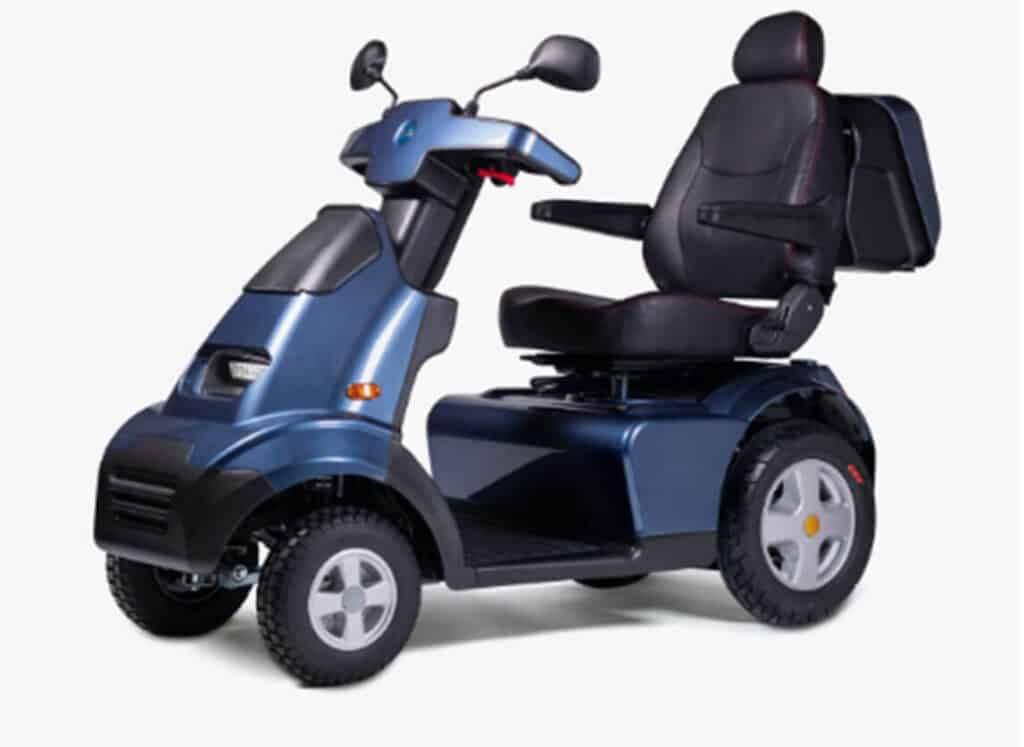
A Class 3 mobility scooter is a larger and more powerful scooter designed for both pavement and road use. These scooters can usually travel up to 8 mph on roads, but they must be limited to 4 mph when used on pavements.
Because Class 3 scooters are intended for road use, they normally come with extra safety features. These may include headlights, rear lights, indicators, mirrors, reflectors, a horn, and a braking system suitable for more demanding travel.
Class 3 scooters are a popular choice for people who need to travel longer distances. They may be ideal if you live in an area where local shops, medical appointments, or social visits are not easily reached by pavement alone.
Where can Class 3 mobility scooters be used?
Class 3 scooters can be used on pavements at a reduced speed, and they can also be used on roads where permitted. However, they are not allowed on motorways, and users should be careful when using faster or busier roads.
These scooters are best suited for people who need more flexibility. For example, you might use the pavement when travelling through a town centre, then switch to road use for a longer stretch where pavements are unavailable or unsuitable.
Common places where Class 3 mobility scooters are useful include:
- Pavements at lower speeds
- Local roads where permitted
- Longer outdoor journeys
- Residential areas
- Trips to nearby towns or villages
- Routes where pavements are uneven, narrow, or missing
In many ways, Class 3 scooters offer more freedom. But with that freedom comes more responsibility. Since they can be used on roads, users need to be more aware of traffic, visibility, road positioning, and legal requirements.
Key features of Class 3 mobility scooters
Class 3 mobility scooters usually include more advanced features than Class 2 models. These may include:
- A maximum road speed of around 8 mph
- Speed limiter for pavement use
- Front and rear lights
- Indicators
- Rear-view mirrors
- Horn
- Reflectors
- Stronger battery
- Longer travel range
- Larger wheels
- Improved suspension
- More supportive seating
- Better ground clearance
These features make Class 3 scooters better suited to outdoor journeys, rougher surfaces, and longer trips. They are generally more comfortable for extended use, especially if you need extra legroom, stronger suspension, or a smoother ride.
Class 2 vs Class 3 Mobility Scooters: Main Differences
Speed
One of the biggest differences between Class 2 and Class 3 mobility scooters is speed. Class 2 scooters are usually limited to 4 mph. This speed is suitable for pavements, where users are travelling near pedestrians.
Class 3 scooters can usually travel up to 8 mph on roads. However, when used on pavements, they must be reduced to 4 mph. This gives Class 3 users the option of faster travel when road conditions allow, while still keeping pavement use safer for pedestrians.
Road use
Class 2 scooters are not made for regular road use. They are mainly pavement scooters. You may use them briefly on the road in certain situations, such as crossing a road or avoiding an obstruction, but they are not designed for longer road journeys.
Class 3 scooters, on the other hand, are road-capable. They are built with road safety features and can be used on roads where allowed. This is one of the key reasons people choose Class 3 scooters over Class 2 scooters.
Size and weight
Class 2 mobility scooters are usually smaller and lighter. This makes them easier to store, transport, and manoeuvre. If you have limited storage space or need a scooter that can fit into a car boot, a Class 2 model may be more practical.
Class 3 mobility scooters are generally bigger and heavier. They often have larger batteries, stronger motors, wider seats, and tougher frames. While this makes them more stable and comfortable outdoors, it also means they are harder to lift or transport without a suitable vehicle or ramp.
Portability
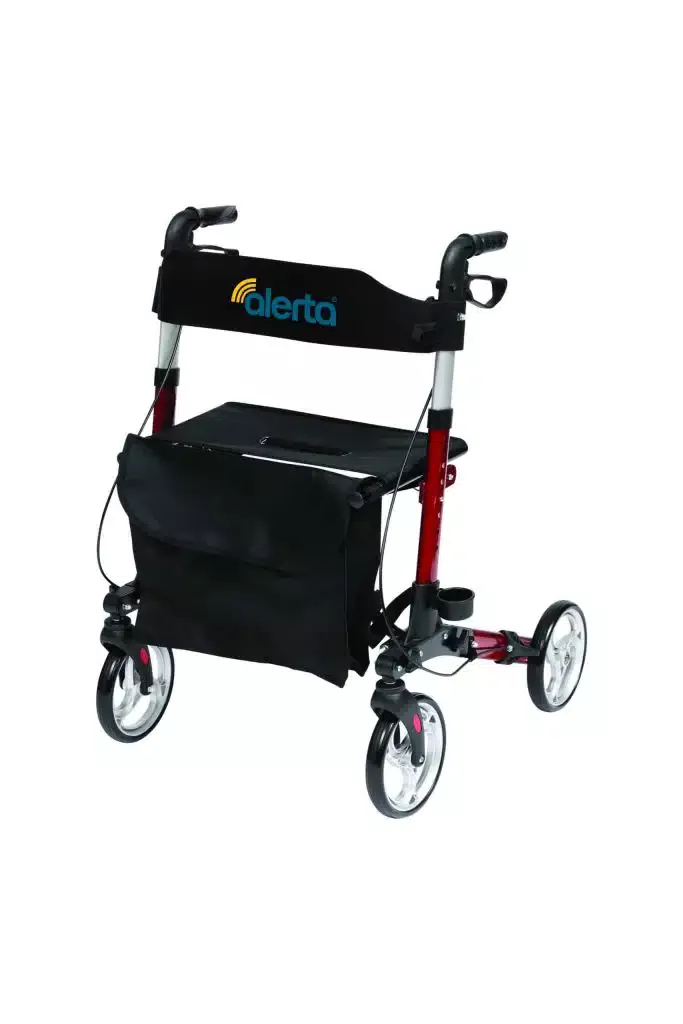
If portability matters, Class 2 scooters often have the advantage. Many Class 2 models are foldable or can be dismantled into smaller parts. This is useful for people who travel by car or need to store the scooter in a hallway, cupboard, or small shed.
Class 3 scooters are less portable. Some can be transported in larger vehicles, but they are not usually designed to be lifted in and out of a standard car boot. They are better for users who plan to keep the scooter at home and use it directly from the doorstep.
Comfort
Class 3 scooters often provide better comfort, especially for longer journeys. They usually have larger seats, better suspension, more legroom, and bigger wheels. This can make a big difference if you travel over uneven pavements, rough paths, or longer outdoor routes.
Class 2 scooters can still be comfortable, but they are usually designed for shorter trips. If you only need a scooter for quick errands or indoor use, that may be perfectly fine. But for longer journeys, comfort becomes a bigger deal.
Battery range
Class 3 scooters usually have a longer battery range than Class 2 scooters. This is because they are made for longer trips and often have larger batteries. A Class 2 scooter may be enough for short local journeys, but a Class 3 scooter may be better if you need to travel several miles at a time.
Battery range can vary a lot depending on the model, user weight, terrain, weather, tyre condition, and battery age. So, it is always worth checking the manufacturer’s stated range and leaving yourself a safety margin.
Safety features
Class 3 scooters need more safety features because they are suitable for road use. These often include lights, indicators, mirrors, reflectors, and a horn. These features help make the scooter more visible and predictable to other road users.
Class 2 scooters may have fewer safety features because they are not intended for road travel. Some still include lights or reflectors, but the requirements and expectations are different.
Pros and Cons of Class 2 Mobility Scooters
Advantages of Class 2 mobility scooters
Class 2 scooters are popular because they are simple, practical, and easy to manage. They are a good choice for people who want mobility support without needing a large road-going vehicle.
- Easy to use on pavements and pedestrian areas
- Usually lighter and more compact
- Often easier to store at home
- Some models fold or dismantle for car travel
- Good for shopping centres and local errands
- Generally more affordable than Class 3 scooters
- Less intimidating for new users
Disadvantages of Class 2 mobility scooters
Of course, Class 2 scooters are not perfect for everyone. Their smaller size and lower speed can become limiting if you need to travel longer distances or use routes without reliable pavements.
- Not suitable for regular road use
- Lower maximum speed
- Shorter battery range on many models
- May be less comfortable on rough surfaces
- Smaller wheels can struggle with uneven ground
- Less powerful than Class 3 models
Pros and Cons of Class 3 Mobility Scooters
Advantages of Class 3 mobility scooters
Class 3 scooters are a strong option for people who want more range, comfort, and flexibility. They are especially useful for those who need to travel beyond nearby pavements and shops.
- Can be used on roads where permitted
- Faster maximum speed on roads
- Usually longer battery range
- Better for longer journeys
- Often more comfortable
- Typically includes lights, indicators, mirrors, and horn
- Better suspension and larger wheels on many models
- More stable for outdoor use
Disadvantages of Class 3 mobility scooters
The extra power and comfort of a Class 3 scooter come with trade-offs. These scooters are usually larger, heavier, and more expensive. They also require more confidence and awareness when used on roads.
- Bigger and heavier than Class 2 scooters
- Usually harder to transport in a car
- Requires more storage space
- Often more expensive
- May feel bulky in tight pedestrian areas
- Road use requires extra care and confidence
Do Class 3 Mobility Scooters Need to Be Registered?
In the UK, Class 3 mobility scooters generally need to be registered with the DVLA. They do not usually need road tax in the same way as a car, but registration is still an important step. Requirements can change, so it is always wise to check the latest official guidance before buying or using a Class 3 scooter on the road.
Class 2 mobility scooters do not normally need to be registered because they are not road-going vehicles. Since they are designed for pavement use, the rules are simpler.
This is a major point in the Class 2 vs Class 3 mobility scooters comparison. A Class 2 scooter may be easier to buy and use straight away, while a Class 3 scooter may involve more responsibility because it can be used on roads.
Do You Need Insurance for a Mobility Scooter?
Mobility scooter insurance is not always legally required, but it is often strongly recommended. Even careful users can have accidents, and insurance may help cover damage, theft, breakdowns, or third-party claims.
For Class 3 scooters, insurance can be especially useful because these scooters may be used on roads. Road use naturally increases the chance of incidents involving other vehicles, pedestrians, or property.
Before choosing insurance, check what the policy includes. Some policies may cover public liability, accidental damage, theft, punctures, recovery, or worldwide travel. Others may be more basic. As always, read the details before signing up.
Which Mobility Scooter Is Best for Pavement Use?
For pavement use, a Class 2 mobility scooter is often the better choice. It is slower, smaller, and easier to handle in pedestrian spaces. If your daily trips involve local shops, short errands, or moving around town, Class 2 may be all you need.
That said, Class 3 scooters can also be used on pavements when limited to 4 mph. So, if you want a scooter that can handle pavements and roads, Class 3 gives you more flexibility.
The key question is this: do you need road use, or will pavement use be enough? If pavement use covers most of your travel, Class 2 is usually simpler and more convenient.
Which Mobility Scooter Is Best for Road Use?
For road use, a Class 3 mobility scooter is the right category. Class 3 scooters are designed with road travel in mind and include the safety features needed for visibility and signalling.
If your area has narrow pavements, poor footpaths, rural roads, or longer distances between places, a Class 3 scooter may be more suitable. It gives you the option to travel at a higher speed on roads while still being able to slow down for pavement use.
However, road use is not for everyone. You should feel confident controlling the scooter, reading traffic situations, using mirrors and indicators, and staying visible. A bigger scooter can offer more independence, but it also asks more of the user.
How to Choose Between a Class 2 and Class 3 Mobility Scooter
Think about your daily journeys
Start by looking at where you actually go. Are your trips mostly short and local? Do you mainly use pavements, shops, and pedestrian areas? If so, a Class 2 scooter may be ideal.
But if you travel longer distances, need to use roads, or live somewhere with limited pavements, a Class 3 scooter may make more sense. It may feel like a bigger investment, but it could give you the freedom you need.
Consider storage space
Storage is easy to overlook, but it matters a lot. A small Class 2 scooter may fit in a hallway, porch, or compact storage area. A Class 3 scooter may need a garage, shed, or dedicated charging space.
You should also think about access. Can you get the scooter through your doorway or gate? Is there a step at the entrance? Will you need a ramp? A scooter that looks great in a showroom may not be practical if it is awkward to store at home.
Check transport needs
If you often travel by car and want to take your scooter with you, a portable Class 2 scooter may be the better option. Many Class 2 scooters can fold or come apart, making them easier to lift into a boot.
Class 3 scooters are generally not as travel-friendly. They are better suited to people who use the scooter directly from home rather than transporting it elsewhere.
Look at comfort and support
Comfort matters, especially if you’ll be sitting on the scooter for more than a few minutes at a time. Check the seat width, back support, armrests, legroom, suspension, and ease of getting on and off.
Class 3 scooters often provide more comfort, but some high-quality Class 2 models can also feel very supportive. The best choice is the one that suits your body, your route, and your routine.
Think about battery range
Always check how far the scooter can travel on a full charge. But don’t rely only on the maximum range listed by the manufacturer. Real-world range may be lower depending on hills, surfaces, temperature, user weight, and how old the battery is.
As a rule of thumb, choose a scooter with more range than you think you’ll need. Running out of battery away from home is frustrating, and frankly, it’s a situation nobody wants.
Try before you buy
Whenever possible, test the scooter before buying it. A scooter may look perfect online but feel uncomfortable or awkward in person. Try turning, reversing, stopping, adjusting the seat, and using the controls.
Also, check whether the scooter feels stable and easy to handle. Confidence is a big part of safe scooter use. If a model feels too big, too fast, or too heavy, it may not be the best fit.
Class 2 vs Class 3 Mobility Scooters: Quick Comparison Table
| Feature | Class 2 Mobility Scooter | Class 3 Mobility Scooter |
|---|---|---|
| Main use | Pavements and pedestrian areas | Roads and pavements |
| Maximum speed | Usually 4 mph | Usually 8 mph on roads and 4 mph on pavements |
| Road use | Not for regular road use | Designed for road use where permitted |
| Size | Smaller and lighter | Larger and heavier |
| Portability | Often foldable or dismantles | Less portable |
| Comfort | Good for short trips | Better for longer trips |
| Battery range | Usually shorter | Usually longer |
| Safety features | Basic features | Lights, indicators, mirrors, horn, and more |
| Best for | Local errands and pavement travel | Longer journeys and road use |
Common Mistakes to Avoid When Buying a Mobility Scooter
Choosing based on price alone
It is tempting to choose the cheapest scooter, especially when prices vary so much. But the lowest-cost option may not give you the comfort, range, or reliability you need. A scooter is not just a purchase; it is part of your daily independence.
Ignoring where you will use it
A Class 3 scooter may sound better because it is faster and more powerful, but that does not automatically mean it is the right choice. If you mainly use busy pavements and small shops, a larger scooter may be more awkward than helpful.
Likewise, a Class 2 scooter may be too limited if you regularly need to travel on roads or cover longer distances.
Forgetting about storage and charging
Before buying, make sure you have somewhere safe and practical to store and charge the scooter. Batteries need regular charging, and the scooter should be protected from harsh weather where possible.
Not checking weight limits
Every scooter has a maximum user weight. Staying within this limit is important for safety, performance, battery range, and long-term durability. Always check the specification before buying.
Skipping a test drive
A test drive can tell you things a product description never will. You can feel whether the scooter is comfortable, responsive, stable, and easy to control. That small step can save a lot of hassle later.
FAQs About Class 2 and Class 3 Mobility Scooters
What is the main difference between Class 2 and Class 3 mobility scooters?
The main difference is that Class 2 mobility scooters are designed mainly for pavement use and usually have a maximum speed of 4 mph. Class 3 mobility scooters can be used on roads where permitted and usually travel up to 8 mph on roads, while being limited to 4 mph on pavements.
Can a Class 2 mobility scooter go on the road?
A Class 2 mobility scooter is not intended for regular road use. It may be used briefly on the road in certain situations, such as crossing the road or avoiding an obstruction, but it is mainly designed for pavements and pedestrian areas.
Can a Class 3 mobility scooter be used on pavements?
Yes, a Class 3 mobility scooter can be used on pavements, but it should be limited to 4 mph when doing so. The higher speed is for road use only.
Do I need a driving licence for a Class 3 mobility scooter?
In the UK, you do not usually need a driving licence to use a mobility scooter. However, Class 3 scooters may need to be registered, and users should follow the relevant road rules and safety guidance.
Is a Class 3 scooter better than a Class 2 scooter?
Not always. A Class 3 scooter is better for road use, longer distances, and outdoor comfort. A Class 2 scooter is often better for short local trips, portability, and pavement use. The best choice depends on your needs.
Are Class 2 scooters easier to transport?
Yes, many Class 2 scooters are easier to transport because they are smaller and lighter. Some models fold or dismantle, making them suitable for car boots.
Are Class 3 mobility scooters more comfortable?
Class 3 scooters are often more comfortable because they usually have larger seats, better suspension, bigger wheels, and more space. They are designed for longer journeys and outdoor use.
Which scooter should I choose for shopping?
For shopping centres, supermarkets, and local pavement use, a Class 2 scooter is often the most convenient option. It is smaller, easier to steer, and better suited to pedestrian areas.
Which scooter should I choose for longer journeys?
For longer journeys, a Class 3 scooter may be better. It usually offers more battery range, greater comfort, stronger performance, and the option of road use where permitted.
Final Thoughts: Which One Is Right for You?
When comparing Class 2 vs Class 3 mobility scooters, the right choice depends on how you plan to use your scooter day to day.
Choose a Class 2 mobility scooter if you want something compact, simple, and easy to use for pavements, shops, short errands, and local trips. It is often the better choice if portability and storage are important to you.
Choose a Class 3 mobility scooter if you need to travel longer distances, use roads where permitted, or want extra comfort, range, and stability. It is a stronger option for people who need more independence outdoors and are confident using a larger scooter.
At the end of the day, it is not about which scooter is “best” overall. It is about which scooter is best for your lifestyle. Think about your routes, your comfort, your storage space, and your confidence level. Once you match the scooter to your real needs, the choice becomes much easier.
Before buying, it is also a good idea to speak with a mobility specialist, check current legal guidance, and test different models where possible. A little homework upfront can help you find a scooter that feels safe, comfortable, and genuinely useful for everyday life.